The Website That Was Secretly an Application
A prospect came to us last month with a site they’d put together over a weekend. It looked good. Fast, clean, the copy actually said something. About ten minutes into the call they mentioned, kind of offhand, that it was already taking orders and holding people’s card details.
I sort of stopped them there. Because the thing they were describing wasn’t really a website anymore, and I don’t think anyone had pointed that out to them. They’d set out to build a website and somewhere along the way built an application instead, without ever deciding to.
I want to be careful here because this turns into a tools complaint really fast and that’s not what I’m getting at. The tools are good now. Insanely good. You describe what you want and it shows up, and for a marketing page or a portfolio that’s usually fine. Genuinely fine. A lot of the work agencies used to charge for at that level is just gone, and I’m not going to pretend that’s a tragedy. If you can build your own about page on a Sunday, build your own about page on a Sunday.
The part that gets people is that the same tool will build you a checkout with the same shrug, and it’ll come out looking just as finished as everything else.
That’s the whole thing I keep running into. A website mostly shows you stuff. It lays content out, it loads, and when it breaks the worst case is that something looks wrong for a bit. Annoying, fixable, nobody loses anything. But the moment a site starts doing things that stick around after you close the tab, logging people in, moving money, holding data that has to still be right next week, you’re somewhere else entirely. When that breaks you don’t catch it in a preview. You hear about it from a customer who got charged twice, and by then it already happened.
Here’s what I think actually changed, and why this is a now problem and not a forever one. For most of the time I’ve done this, looking done and being done were the same. The only way to make something look finished was to finish it, so the polish told you something true about what was underneath. That’s not the case anymore. You can get the polish without the rest of it, and the polish shows up first. So the moment you feel best about the thing, the demo runs clean, everyone nods, it looks great, is also the moment you know the least about whether it’ll hold.
I think about it as the part you can see versus the part you can’t. The demo is the bit on screen. The part that decides whether this survives a busy Tuesday is the bit that isn’t on screen, and you can’t really judge what isn’t there. The page renders, the button works, the obvious path is smooth, and there’s just no visual tell for the order that double-charges at scale or the data that quietly goes sideways when two people hit it at the same second.
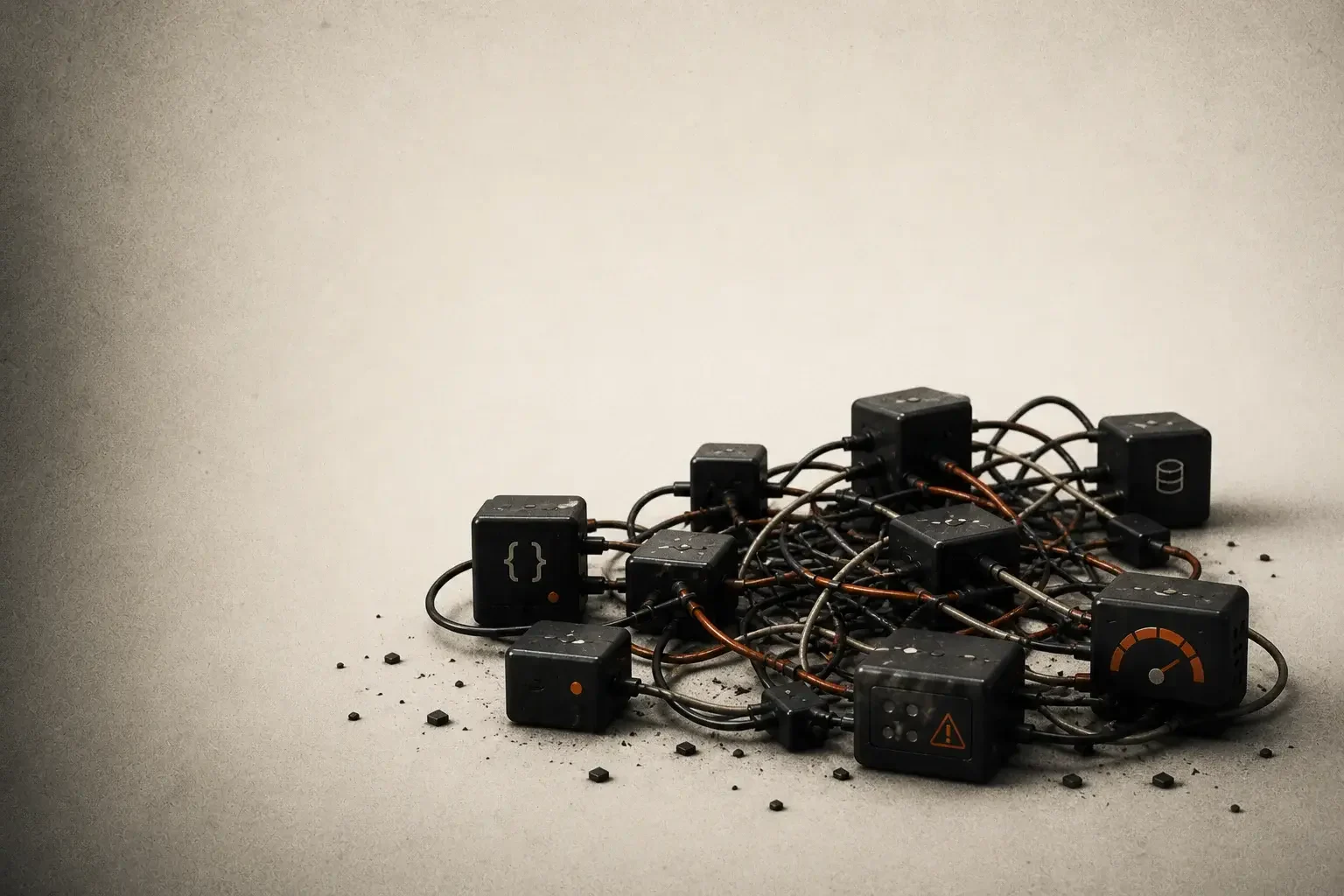
The crossing almost never happens on purpose, which is what makes it sneaky. Nobody decides to turn their website into an application. It goes one sensible little feature at a time. You add accounts, so now you own logins and sessions and the guy who forgot his password. You add payments, so now a bug isn’t a typo, it’s money going the wrong way to actual customers. You start storing things people expect to stay accurate, and “works on my machine” stops meaning anything because the real question is whether it’s still right after a few thousand writes you never watched happen. Any one of those and the rules quietly change underneath you, and “it looks done” stops being worth much, because the thing that can go wrong isn’t the thing you can see.
So if you’re building something right now, the move isn’t to decide the tools are good or bad. They’re fine, I use them. Not for final products but for ideas and brainstorming. The move is to be honest with yourself early about which thing you’re actually making, before there’s real data sitting in it. If it just shows stuff, go nuts, ship it by lunch if you’re feeling it. If it does anything that has consequences, the part you can’t see is the part that matters, and that’s the part I’d slow down on. It’s important to remember that having it generated and actually understanding it when it breaks at 11pm are not the same situation, and you find out which one you’re in at the worst possible time.
That prospect’s a client now. We didn’t rebuild their site, we rebuilt the part that had turned into an application and left the part that was honestly still just a website alone. Figuring out where that line fell was most of the job.
Hopefully this helps answer the important questions early to avoid chaos down the road.