And Zeros Logo
  • Home
  • About
  • Services
    • Branding
    • Platform
    • Growth
  • Portfolio
  • Zero Crossing
  • Contact
    Contact
    Location:
    Santa Fe, New Mexico
    Email:
    hello@andzeros.com
    Phone:
    ‪(505) 395-6413‬
    LinkedinInstagram
    Get in Touch

    • Subscribe
    Subscribe
    And Zeros Logo
    • Home
    • About
    • Services
      • Branding
      • Platform
      • Growth
    • Portfolio
    • Zero Crossing
    • Contact
      Contact
      Location:
      Santa Fe, New Mexico
      Email:
      hello@andzeros.com
      Phone:
      ‪(505) 395-6413‬
      LinkedinInstagram
      Get in Touch

      • Subscribe
      Subscribe
      • Home
      • About
      • Services
        • Branding
        • Platform
        • Growth
      • Portfolio
      • Zero Crossing
      • Contact
        Contact
        Location:
        Santa Fe, New Mexico
        Email:
        hello@andzeros.com
        Phone:
        ‪(505) 395-6413‬
        LinkedinInstagram
        Get in Touch

        • Subscribe
        SEO
        HomeArchive by Category "SEO"

        Category: SEO

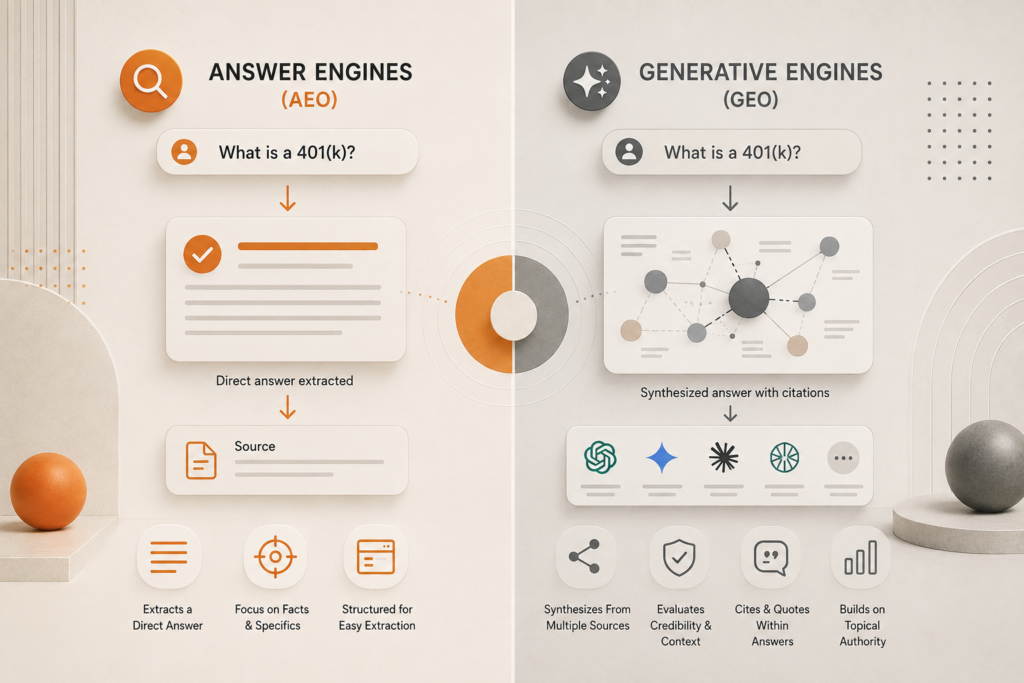
        Light editorial illustration showing an AI citation pipeline where search queries break into sub-queries, pass through ranking layers, and resolve into a cited answer.
        SEOAI
        June 2, 2026By Doug Saltzman

        How AI Engines Actually Decide What to Cite

        Retrieval-Augmented Generation is the mechanism behind every AI citation. The engine breaks your prompt into narrower sub-queries, retrieves a candidate set of passages, scores each by relevance and authority, then synthesizes the answer and attributes the pieces it used. Teams that understand RAG mechanics optimize systematically. Everyone else optimizes by guessing.

        Most people picture an AI engine reading their page the way a person would, top to bottom, weighing the argument. That is not what happens. The engine never sees your page as a page. It sees a pool of text fragments, ranked by math, and it pulls the few that answer the specific question in front of it. If you know how that pool gets built and ranked, you can write for it. If you do not, you are publishing into a process you cannot see.

        What is RAG and how does it work?

        Retrieval-Augmented Generation is a technique that lets a language model pull in external text before it answers, instead of relying only on what it learned during training. The model first retrieves relevant documents from an index or a live web search, then generates its response grounded in that retrieved material. This is the structure behind grounded answers in ChatGPT, Perplexity, Google’s AI surfaces, and Claude when web access is on.

        The reason RAG exists is accuracy. A model working from training data alone has a fixed knowledge cutoff and a tendency to fabricate specifics. By blending generation with a retrieval step, the engine sticks closer to source material and can show its work. That last part matters for you! A system that retrieves before it answers is a system that has to choose sources, and any choice can be reverse-engineered.

        There are two retrieval modes worth separating.

        Real-time RAG fetches live web pages during the query, which is how Perplexity and ChatGPT’s search mode operate. Training-data answers come from pre-learned knowledge with no live fetch. The architecture decides the behavior. A page can sit at position one in Google and still never get cited, because the engine runs a separate evaluation for whether your text is extractable and trustworthy enough to fold into a written answer.

        What happens between your prompt and the citation?

        The whole thing runs in the time it takes the answer to start streaming, which is why it feels instant. Underneath, several steps fire in sequence. The engine analyzes intent, decomposes the prompt into sub-queries, runs those searches in parallel, assembles a candidate set of passages, scores them, and synthesizes a response that attributes the fragments it actually used.

        The synthesis step is where citation happens. The model is not citing your domain because it respects your brand. It is citing the specific passage it lifted to satisfy one sub-query. Your page can contribute one sentence to an answer that pulls from five other sources, and that single contribution is your citation. This reframes the entire optimization target. You are not trying to win a page. You are trying to own a passage that answers a question cleanly enough to survive the scoring step.

        Why does prompt decomposition matter for AEO?

        Prompt decomposition, often called query fan-out, is the step where the engine breaks one complex prompt into several narrower sub-queries and searches each independently. A prompt like “best CRM for a small agency” does not run as one search. It fans out into questions about pricing, integrations, ease of use, small-team features, and real user reviews, even though the user typed none of those explicitly.

        A single prompt can spawn anywhere from a handful to twenty or more sub-queries depending on complexity. Each one runs its own retrieval. This is the mechanic that breaks keyword-era thinking. You might rank beautifully for the headline phrase and stay invisible to the sub-queries that actually decide the citations, because a competitor answered those adjacent questions better than you did.

        The practical move is to map the fan-out before you write.

        List the questions a thorough answer would need to resolve, then make sure your content resolves each one in a discrete, self-contained section. Semrush ran a controlled test optimizing four articles specifically against fan-out queries and saw citations of those pieces more than double. The lesson is that owning the supporting questions, not just the headline term, is what gets you pulled into answers.

        How does the engine score candidate sources?

        Once the candidate passages are assembled, the engine ranks them on two axes that pull in different directions: relevance and authority.

        Relevance is semantic match, measured by how close your passage sits to the sub-query in vector space, the mathematical representation of meaning. Authority is the trust layer, the signals that say this source is reliable enough to repeat.

        Relevance usually does the heavy lifting. Research on ChatGPT citations across millions of prompts found that within a given retrieval set, freshness and authority matter, but relevance to the fanned-out queries is what determines whether a retrieved page actually gets cited rather than just fetched and ignored. A new page that matches the sub-queries well gets cited. A new page that does not gets retrieved and dropped.

        Authority becomes the tie-breaker when relevance is close. In news queries, where many pages match the topic almost identically, engines fall back on page age and source reputation to break the tie. Academic work points the same direction: studies of ChatGPT’s source selection in scholarly contexts found it leans heavily on citation-count signals and well-known journals, amplifying sources that already carry consensus weight. The takeaway for your content is that relevance gets you into the candidate set, and authority decides close calls. You need both, in that order.

        Why does answer block placement on your page change citation odds?

        The engine retrieves passages, not pages, and it extracts the chunk that most cleanly answers the sub-query. If your answer is buried in the eighth paragraph behind setup and throat-clearing, the extractable unit is harder to isolate and easier to skip in favor of a competitor who stated the answer directly. Structure is not decoration here. It is what makes a passage machine-parsable.

        This is the entire case for answer-first writing. Lead a section with a direct, declarative statement that contains the exact phrasing of the question, then support it underneath. A section that opens with its own answer is a clean extraction target. A section that winds up to its answer forces the engine to do work it will often skip. The H2s on your page function like an index of questions; each one should be answerable from the first lines beneath it without the engine needing the rest of the section.

        What signals does each engine weight differently?

        The engines do not behave alike, and treating them as one target wastes effort. Perplexity cites generously, averaging around 6.6 sources per response, and holds onto those citations longer. ChatGPT cites far fewer, typically three to four domains per response, and churns through them fast. Google’s AI surfaces cite the most, often more than a dozen domains, with a more stable core set per prompt.

        Source turnover is the sharpest difference.

        SISTRIX tracked source stability across 82,619 prompts over 17 weeks and found ChatGPT replaces roughly 74% of its cited domains every week, while Google replaces around 56%. The median ChatGPT prompt does not hold a single domain across all 17 weeks. Google’s AI Mode, by contrast, tends to keep a stable core of a couple of domains per prompt plus a rotating carousel.

        There is also a freshness split. Analysis of millions of citations found ChatGPT skews toward fresher content than Google’s organic results by a wide margin, yet the median age of pages it cites still lands around 500 days, with some cited pages over seven years old. Freshness is a strong signal, especially for news, but it does not override relevance. The strategic read is that platform choice changes your tactics more than your industry does. A piece optimized for Perplexity’s durable, multi-source behavior is a different artifact from one chasing ChatGPT’s fast-rotating, few-source answers.

        How can you reverse-engineer which prompts your content can win?

        Start from the fan-out, not the keyword. Take a prompt your audience actually types and decompose it yourself into the sub-queries an engine would generate. Free fan-out simulators exist for this, and so does manual work: write down every question a complete answer would have to resolve. That list is your real target set.

        Then check which of those sub-queries you already answer cleanly and which you do not. Run the prompt through the engines you care about and read which domains get cited for each facet. The sources winning the sub-queries you are missing are your direct competition for that answer, and the gap between their passages and yours is your edit list. This is more honest than a rank check, because it tells you which specific questions your content can credibly win rather than which phrases you happen to rank for.

        What can you change this week based on RAG mechanics?

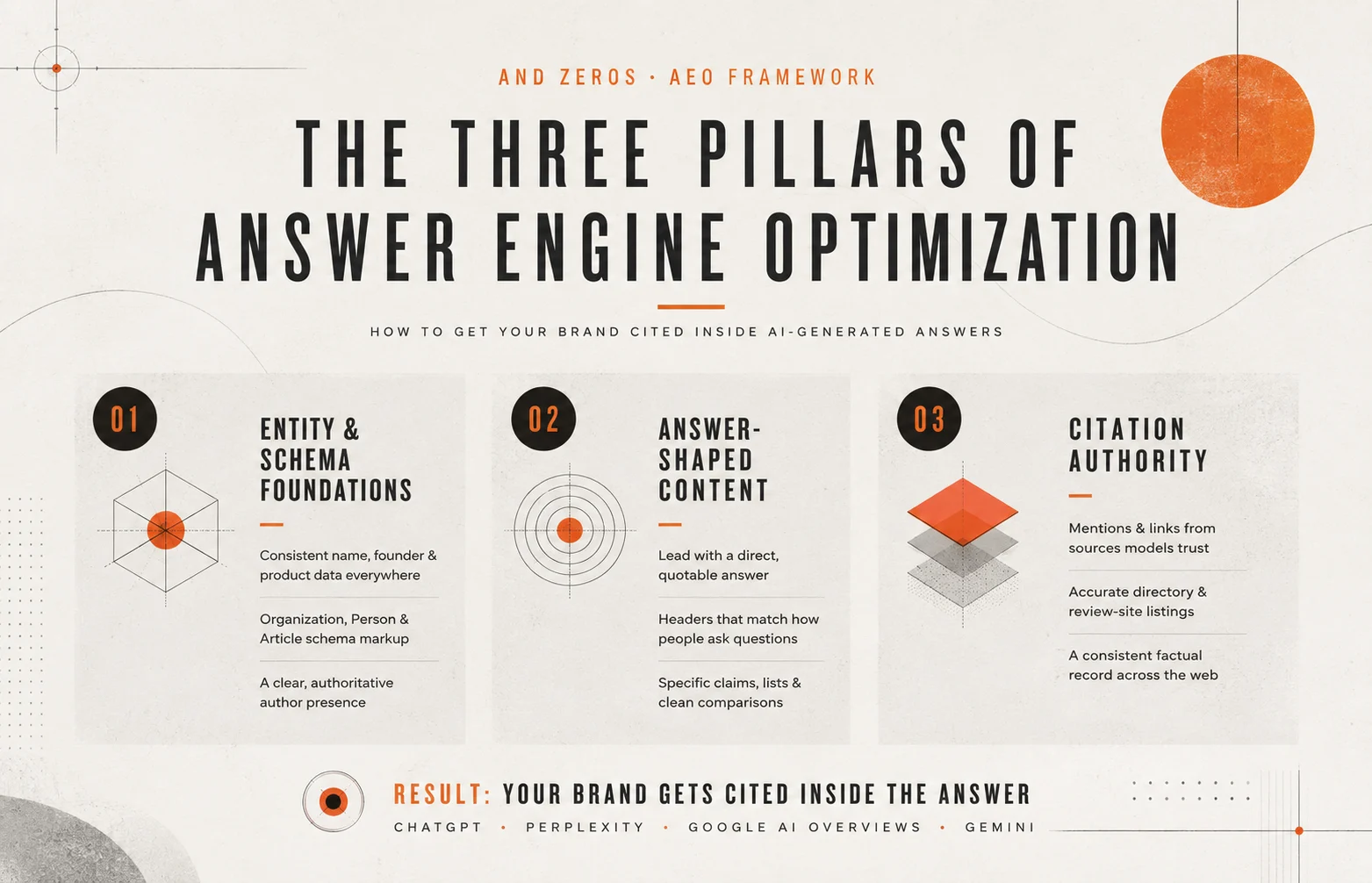
        Three moves, none of which require a rebuild. First, convert your H2s into the actual questions your audience asks, and make the first two sentences under each one a complete, standalone answer. That single change turns vague sections into clean extraction targets.

        Second, map the fan-out for your two or three highest-value pages and add sections for the sub-queries you are not yet answering. You are filling the gaps that decide citations, not adding filler. Third, pick your platform priority deliberately. If your audience lives in Perplexity, lean into depth and durable, well-sourced passages that survive its longer citation window. If they live in ChatGPT, accept the fast churn and build a publishing cadence that re-earns citations rather than expecting one piece to hold. The mechanics are knowable. The teams that act on them stop guessing.

        FAQ

        Is RAG the same as web search inside AI?

        Not exactly. Web search is one source RAG can retrieve from, but RAG is the broader pattern of fetching external text and grounding the answer in it. That text can come from a live web crawl, a private document store, or a vector index. When ChatGPT or Perplexity searches the web mid-answer, that is RAG using web search as its retrieval layer. RAG over a company’s internal docs uses no web search at all.

        Why do AI engines cite different sources for the same prompt?

        Because each engine decomposes the prompt differently, retrieves from different indexes, and weights relevance, authority, and freshness on its own curve. ChatGPT pulls three to four fast-rotating domains, Perplexity pulls around 6.6 and holds them longer, and Google’s AI Mode pulls a dozen or more with a stable core. Same question, different fan-out, different scoring, different citations. Source rotation compounds it: ChatGPT alone swaps roughly 74% of its cited domains week to week.

        Does the citation half-life data still apply?

        Yes, and it is more useful than a single fabricated number. Research on 3.5 million citation events puts ChatGPT’s citation half-life at about 3.4 weeks, the fastest of the major platforms, with Perplexity nearly 70% longer at 5.8 weeks and Google’s surfaces clustered in the four-to-five-week range. The practical meaning is that a ChatGPT citation needs re-earning roughly monthly, while a Perplexity citation works for you longer. Plan your publishing cadence around the platform you are optimizing for.

        Read More
        Vintage-inspired 35mm-style still life featuring Reddit-style tokens spilling from a metal strainer beside a weathered citation card, symbolizing how AI systems retrieve community content but rarely cite it directly.
        SEO
        May 28, 2026By Doug Saltzman

        Why ChatGPT Retrieves Reddit but Rarely Cites It

        ChatGPT reads Reddit constantly and credits it almost never. Ahrefs studied 1.4 million prompts and found Reddit gets cited just 1.93% of the time, yet accounts for 67.8% of every page the model pulls in and never names. That gap between getting read and getting credited is the part of AI search most teams are measuring wrong.

        There are two things happening when ChatGPT answers a question, and they look the same from the outside but they are not. The first is retrieval. Your page gets pulled into the model’s working set, read, and used to shape the answer. The second is citation Your brand gets named, with a clickable link the user actually sees.

        Most teams chase the first and assume it gets them the second. It does not 🙂

        ChatGPT cites only about half the pages it retrieves, and the half it drops is doing real work in the answer without ever showing up. Nothing demonstrates that better than Reddit.

        What the study found

        Ahrefs ran 1.4 million ChatGPT prompts and tracked which retrieved pages made it into the final answer as citations. Reddit landed at the bottom… a 1.93% citation rate against more than 16 million retrieval events, the second-highest volume of any source. Put differently, 67.8% of every page ChatGPT pulls in and then refuses to credit comes from Reddit.

        The model is mining Reddit for what people actually think, then handing the citation to a more presentable source. Ahrefs put it plainly: ChatGPT uses Reddit to understand topics and gauge consensus, but almost never gives it credit. It reads the room, forms a view, then footnotes an institution.

        This makes sense when you look at what people ask AI. A lot of prompts are not fact lookups. They are recommendation and comparison questions; which tool is best for a small team, how does this service actually feel to use. Reddit has the raw language for those answers. ChatGPT borrows it, then cites someone in a suit.

        Where citations actually come from

        The same study found 88% of ChatGPT’s citations flow through one channel; ordinary web search. Not its Reddit feed, not YouTube, not academic sources. The general search index, the same one you have been trying to rank in for years.

        So the entry ticket to being cited is still ranking. That is not the old SEO game wearing a new label, but it is not a different game either. If you do not show up in conventional organic results for a query, the channel that produces nearly nine in ten citations is closed to you before the model reads a word of your page.

        Once you are in that pool, one small thing moves the needle more than it should. Pages with plain, readable URLs got cited 89.78% of the time. Pages with opaque ones, 81.11%. ChatGPT screens the title and the URL before it ever opens the page, so a descriptive slug is a nearly nine-point swing that costs nothing but a habit at publish time.

        There is a freshness wrinkle worth knowing. Within any single answer, the pages that got cited skewed older, around 500 days on average, while the freshest pages got read and discarded. ChatGPT likes fresh content in general, but inside a given answer it leans on established pages that match the question well. Relevance carries the weight. Freshness only breaks ties.

        The one idea to take from this

        Stop treating AI visibility as a single number. Retrieval and citation are two different funnels with two different jobs, and optimizing one does almost nothing for the other.

        Retrieval is being in the conversation. You earn it with breadth, ie: showing up where the model gathers context, Reddit included. Citation is being named in the verdict. You earn it with precision; ranking in search, writing titles that match the specific question being asked, and keeping your URLs clean.

        The diagnostic that matters is the ratio between the two. How often are you retrieved, and what share of that turns into a citation? A page that gets read constantly but cited rarely is doing free work for the model and getting nothing back. That is the Reddit problem, and it can be your own content’s problem too. A blended dashboard hides it. Splitting the two metrics is the only way to see where your credit is leaking.

        If retrieval is the signal entering the board, citation is the moment it crosses into the mix loud enough to hear. Plenty of tracks get recorded. Fewer make the master.

        What to do this week

        Pick the pages you most want cited and check whether they rank organically for their target query. If they do not, citation is effectively closed until they do, so ranking comes first.

        Then take each page’s keyword and break it into the narrower questions a user is really asking underneath it. Rewrite the title to answer the sharpest one, not the broad term. ChatGPT splits every prompt into sub-questions before it retrieves, and it cites the pages that answer those, not the ones that vaguely cover the territory.

        Fix your URLs going forward. Descriptive slug, every time. Nine points for free.

        And separate your measurement! Track retrieval and citation as two columns and watch the ratio. That number tells you exactly which pages to rewrite.

        One caveat, because the data deserves it. This study ran on ChatGPT 5.2 in February 2025, and Ahrefs flags that newer versions have already shifted citation behavior. The specific percentages will drift. The structure will not. Retrieval and citation are separate funnels with separate rules, and that is the part worth building around.

        FAQ
        Should I stop investing in Reddit?

        No. A low citation rate is not low influence. ChatGPT reads Reddit to form the opinions it then attributes to other sources, so your presence there shapes what the model says about you even without a visible link. Treat Reddit as a sentiment input, not a citation output. The mistake is expecting links, not getting them, and walking away from the job Reddit actually does.

        Does this hold for Claude and Perplexity?

        The Reddit numbers are ChatGPT-specific, but the retrieve-more-than-you-cite pattern shows up across every engine. Each one favors different sources and applies its own selection logic, so measure them separately rather than assuming one model describes all of them. The gap is universal, but the source preferences are not.

        How do I measure my own ratio?

        Use a tool that separates retrieved pages from cited pages instead of reporting one blended score. Compare how often your URLs enter the working set against how often they get named, and track it per page over time. Several platforms now expose this directly and let you filter for prompts where a competitor is cited and you are not, which hands you a concrete list of pages to fix.

        Read More
        Editorial-style still life featuring five AI citation source types represented as abstract research documents, podcast transcript elements, comparison sheets, and publication artifacts arranged on a dark textured background with muted cream and terracotta tones.
        SEOAI
        May 26, 2026By Doug Saltzman

        The Five Source Types That Convert AI Retrieval Into Citation

        Most of the conversation around GEO and AEO is about getting retrieved. Getting your content into the pool that an AI system pulls from when it’s assembling an answer.

        Retrieval is not the goal, citation is.

        There’s a meaningful difference between your content being considered and your content being used. The brands winning in AI search right now aren’t just producing more content and hoping the volume works in their favor. They’re producing the right types of content that convert from retrieval to citation at a higher rate than everything else.

        After studying citation patterns across dozens of queries in our clients’ industries, five source types showed up consistently as the ones that actually close that gap.

        Why the retrieval-to-citation ratio matters

        AI systems pull from a large pool of potentially relevant content when assembling a response. Most of that content gets retrieved and then discarded because it doesn’t meet whatever threshold the model is using for citation quality. The brands that understand this stop asking how do I get more content out there and start asking what kind of content actually makes the cut.

        Chasing volume on the wrong source types is one of the most common and expensive mistakes we see. You can publish 50 blog posts and get retrieved constantly and cited almost never. Or you can publish five things in the right formats and show up in AI answers consistently. The ratio is what matters.

        Here are the five source types that convert.

        1. Wikipedia entity pages

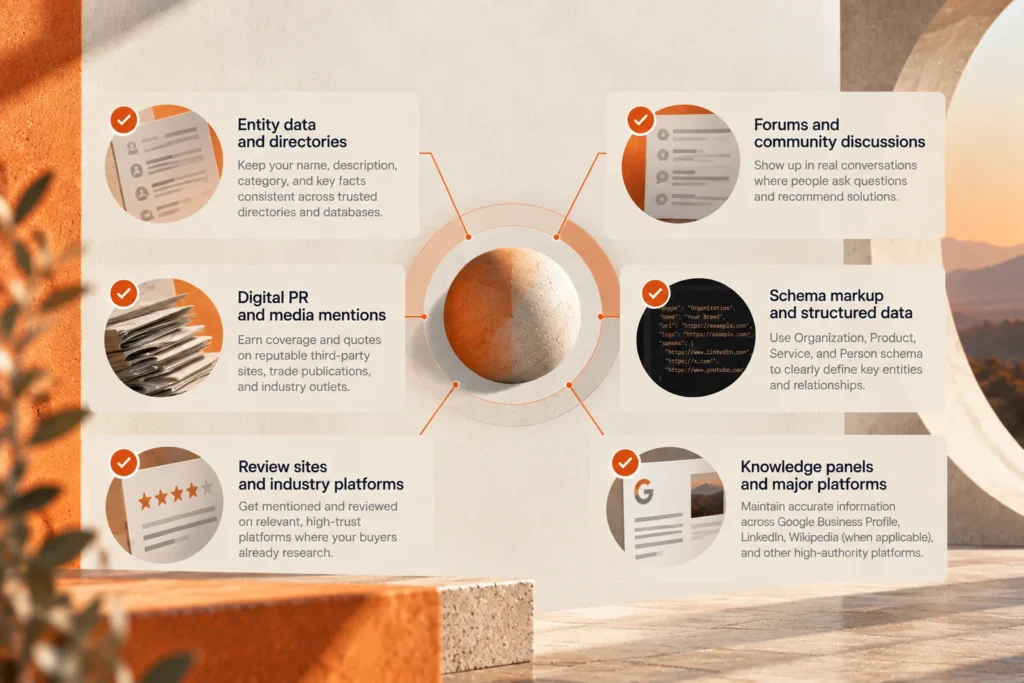
        Wikipedia has the highest retrieval-to-citation ratio of any source type we’ve tracked. AI systems treat it as a baseline trust signal. If your brand, your founder, or your core framework has a legitimate Wikipedia presence, you are starting every query from a position of verified authority.

        The key word is legitimate. Thin pages, promotional language, and unsourced claims get flagged and removed. Getting onto Wikipedia the right way means having third-party coverage that establishes notability first. Press mentions, industry awards, conference appearances, academic citations. The Wikipedia page is the endpoint, not the starting point.

        Once it exists and is maintained correctly, the compounding effect is significant. Every AI system that uses Wikipedia as a training or retrieval source carries your entity forward.

        How to activate: identify whether your brand or founder already has enough third-party coverage to support a page. If yes, draft a neutral, sourced entry or work with someone who knows Wikipedia’s guidelines. If no, build the coverage first and revisit.

        2. Vendor blog posts with original data

        Generic vendor content gets retrieved and discarded at a high rate. Vendor content with original data, meaning research you ran, surveys you fielded, patterns you observed across your own client base, converts at a significantly higher rate.

        The reason is straightforward. AI systems are looking for information they can’t find everywhere else. If your blog post is restating what 10 other posts already say, the model has no incentive to cite you specifically. If your post contains a finding, a ratio, a pattern, or a framework that exists only on your site, you become a primary source.

        This is also one of the most accessible plays for smaller teams. You don’t need a research budget, you need to document what you’re actually seeing in your work and publish it clearly.

        How to activate: look at the work you’re already doing for clients. What patterns are you noticing? What data points are you tracking that others aren’t publishing? Turn those observations into posts structured around a clear, citable finding.

        3. Comparison and review pages

        A Princeton GEO study found that adding citations, statistics, and authoritative voice boosted AI citation visibility by up to 40%. It’s not because comparison articles are better written but because they’re structurally easier for a model to extract from.

        Comparison pages answer a specific, high-intent question in a format that maps directly to how AI systems chunk and retrieve content. They name specific entities, they make declarative statements, and they organize information in a way that makes the extraction trivial.

        Comparison pages outperform pure review pages because they force specificity. A review of one product can be vague. A comparison of two products requires naming both, stating clear differences, and making a recommendation. That structure is exactly what AI systems are looking for.

        How to activate: identify the comparison queries in your space. Tool A versus Tool B. Agency model versus in-house. Strategy X versus Strategy Y. Build pages that answer those questions directly and completely, with your genuine perspective, not a diplomatic both-sides treatment.

        4. Niche industry publications

        High-authority general publications carry domain authority. Niche industry publications carry topical authority, which is increasingly what AI systems use to determine whether a source is credible on a specific subject.

        A mention in a trade publication that covers your exact industry, written for your exact audience, signals to the model that your brand is recognized within the relevant topic cluster. This is different from a generic press mention. The specificity of the publication is part of the signal.

        The practical challenge is identifying which publications in your space actually carry weight with AI systems versus which ones look authoritative but aren’t indexed or trusted in ways that matter. The test is whether the publication’s content surfaces in AI answers on relevant queries. If it does, a mention there is worth pursuing.

        How to activate: map the publications that already appear in AI answers on your core topics. Pursue contributed articles, expert quotes, and data citations in those specific outlets rather than spreading effort across everything.

        5. Founder-led podcasts with transcripts

        This is the most underestimated source type on the list and I love me a good podcast!

        Audio content is not retrievable by AI systems but transcripts are.

        A founder-led podcast where you’re discussing your frameworks, your observations, and your specific point of view on your industry generates something uniquely valuable when it’s transcribed and published correctly: a large volume of naturally structured, entity-rich, first-person expert content that reads as authentic rather than produced.

        The reason this converts well is that podcast transcripts tend to be specific in ways that edited blog content often isn’t. You reference real examples, real tools, real scenarios. You make declarative statements without hedging them to death. You use the language of your industry naturally. All of that is exactly what AI systems are looking for when they’re deciding whether to cite a source.

        How to activate: if you’re already doing a podcast, make sure every episode has a cleaned transcript published on your site as a standalone page with proper headers and structured markup. If you’re not doing a podcast, a long-form interview or Q&A format with a transcript achieves the same effect.

        The right mix

        You don’t need all five working simultaneously to see results. But you do need more than one because different AI systems weight different source types differently and the landscape is shifting fast enough that concentration in any single source type carries risk.

        A practical starting point for most teams is to focus on vendor content with original data first because it’s fully within your control and produces compounding value quickly. Layer in comparison pages on your core queries. Then work toward the Wikipedia and niche publication plays as your third-party coverage builds.

        Founder podcast infrastructure is a longer-term build but one of the highest-ceiling plays on the list if you’re willing to be consistent with it.

        Where to start

        The most common mistake is trying to do everything at once and doing none of it well. Pick the source type where you have the most existing material or the clearest path to producing it, execute it at a high level, and measure whether your citation rate on relevant queries improves before adding the next layer.

        AI citation is not a volume game. It’s a quality and structure game. The teams that figure that out early are building an advantage that compounds every quarter.

        At And Zeros, auditing AI citation presence and building the content infrastructure to improve it is a core part of what we do. If you want to know how your brand is showing up inside ChatGPT, Perplexity, and Google AI Overviews, get in touch.

        Read More
        Abstract editorial-style visualization of a five-step weekly AEO workflow with compounding growth chart, textured analog design elements, and retro-inspired data blocks on a dark cinematic background.
        SEOAI
        May 21, 2026By Doug Saltzman

        The Five-Step Weekly AEO Cadence That Produces Compounding Results

        A working weekly AEO program runs five activities, every week, sustained over time:

        • Monday: review citation movement from the previous week
        • Tuesday: publish one substantive piece of content
        • Wednesday: one outreach for earned mention
        • Thursday: refresh one existing page
        • Friday: five-sentence internal report

        That’s the entire operational cadence and the teams winning AEO in 2026 aren’t doing more than this. The teams losing AEO are either doing nothing, doing five things in a sprint and then disappearing for a month, or doing 20 things one week and zero the next.

        Cadence beats intensity.

        The compounding only happens when the rhythm is sustained.

        Why is cadence the metric that matters?

        Most marketing teams measure AEO programs by output.

        Pieces published per quarter, Reddit threads commented on, and podcasts pitched. The output metrics produce a comfortable narrative. TLDR: more work equals more results.

        The output metrics are wrong for AEO!

        AEO citation share is a function of sustained presence in the source types that drive citations. A team that publishes one excellent piece per week for 52 weeks will outperform a team that publishes 200 pieces in Q1 and then disappears until Q4. The compounding effect requires the rhythm.

        There ar three reasons cadence matters more than volume.

        One: AI engines reward source consistency.

        When an AI engine evaluates whether a brand is a defensible source on a topic, it looks at the consistency of the brand’s presence over time. Sporadic publication patterns signal inauthentic engagement with the topic. Consistent publication patterns signal genuine expertise. The engines weight the second pattern higher.

        Two: maintenance work compounds.

        Citations decay. The work to maintain inclusion is structural, not optional. A team running a weekly cadence does refresh work routinely. A team running on sprints does it only when they remember. The first team maintains citation share. The second team watches it decline.

        Three: the team builds pattern recognition.

        The Monday citation review, run weekly, produces something that quarterly reviews can’t: pattern recognition. The team learns what types of content earn citations in their category. They learn which competitors are gaining and losing share, and why. They learn how the engines respond to different content structures.

        What does Monday citation review actually involve?

        On Monday morning block 60-90 minutes on the senior AEO operator’s calendar. Open the previous week’s citation data. The activity has four parts.

        Part one: read the citation share dashboard.

        Look at the headline number. Citation share across your priority 20 buyer prompts, current week vs previous week. Note the direction and magnitude of change.

        If your citation share is flat, the analysis stops here and the rest of the time goes to forward-looking work. If your citation share moved meaningfully (more than 2 percentage points in either direction), continue to part two.

        Part two: identify the prompts driving the change.

        Not all prompts move equally. Drill into the prompt-level view. Identify which specific prompts gained or lost citation share. Most weeks, the aggregate movement is concentrated in 2-4 specific prompts, not distributed evenly.

        Part three: name the most likely cause.

        For each prompt with meaningful movement, name one likely cause in one sentence. Examples:

        • “Citation share dropped from 31% to 22% on prompt 7. A competitor (HubSpot) published a definitive comparison guide on April 14 that’s now appearing as the top citation across ChatGPT and Perplexity.”
        • “Citation share increased from 12% to 18% on prompt 12. Our pricing page refresh on April 22 added structured data that’s getting picked up by Claude and Gemini.”

        The discipline of naming a cause forces the team to develop hypotheses rather than just observe data.

        Part four: identify the top action for the next week.

        Based on the movements and hypotheses, identify the single highest-leverage action the team will take this week to improve citation share in the priority prompts. Not three actions. One action. Specific, owned, and dated.

        The Monday review ends when the action is named, owned, and dated. The rest of the week executes against it.

        What should Tuesday’s publish look like?

        Tuesday is publish day. One piece. Not three. Not five. One.

        The single most important AEO finding from Q2 2026 was that brands gaining citation share published less, not more. The eight B2B SaaS brands that gained meaningful citation share in Q2 each published one major piece in the quarter, not five.

        Depth beats breadth.

        The publish on Tuesday should be one of three types: a definitive piece (3,000-5,000 words, designed to be cited), a cluster support piece (800-1,500 words, supporting a definitive piece), or a maintenance refresh that’s substantial enough to count as new.

        In aggregate: 4-6 definitive pieces, 12-20 cluster supports, 4-6 refreshes per year. That’s 20-32 pieces per year, or roughly one per Tuesday with appropriate gaps. This is dramatically less than most content teams publish. The reduction is the point…. I can see you smiling now!

        What does Wednesday outreach for earned mention involve?

        Wednesday is the day that breaks most AEO programs.

        The Monday review is comfortable (it’s data work). The Tuesday publish is familiar (it’s content work).

        The Wednesday outreach is uncomfortable for most marketing teams because it’s relationship work, and relationship work doesn’t fit cleanly into marketing function org charts.

        The activity is one substantive outreach per week aimed at earned-media-light placements. Niche podcasts. Vertical publications. Industry conferences. Wikipedia contribution opportunities. Guest posts on established industry blogs.

        The outreach is targeted, not spray-and-pray. The Monday review should have surfaced which earned-media targets matter most for your priority prompts.

        Expected hit rate: 1 in 5 outreaches converts to a real placement. Expected timeline: 4-12 weeks from outreach to publication. At 52 outreaches per year, that’s roughly 10 earned-media placements per year. Across two years, 20 placements. Each one compounds… not to shabby now.

        A senior person should do this work. A junior contractor running automated outreach will get a 1-in-50 response rate. A senior strategist who has actually engaged with the target’s content for three months will get a 2-in-5 response rate.

        What does Thursday’s page refresh involve?

        Thursday is maintenance day. Pick one existing page that’s losing citation share and refresh it.

        A real refresh has six elements:
        Updated data, strengthened answer block, improved schema, new examples, stronger internal linking, and re-publication signaling. Not just changing the date.

        Maintenance is the most-underrated AEO activity. Most teams skip it entirely. It’s invisible work but it does keep your priority pages in the AI citation pool, which matters because citation half-life means pages drop out without intervention.

        What does the Friday five-sentence report look like?

        Five sentences:

        Sentence 1: Citation share number, current week.
        Sentence 2: Movement direction and most likely cause.
        Sentence 3: Top action for next week.
        Sentence 4: Owner and deadline for the top action.
        Sentence 5: Confidence rating (high/medium/low) with one sentence of context.
        

        The CMO reads it in 30 seconds. The format forces specificity, produces decisions, surfaces confidence, builds pattern recognition over 52 weeks, and makes AEO legible at executive level.

        Where do most teams get stuck?

        Typically we see three failure modes:

        The cadence becomes intermittent.
        A launch happens and they skip a week. Then a conference. By month four, the rhythm is broken.

        The senior operator role is unfilled or junior.
        Work gets delegated. Junior team produces good data and weak strategy. The strategy doesn’t ship.

        The cadence runs but doesn’t connect to broader marketing strategy.
        AEO runs parallel to content, PR, community. Nothing coordinates.

        Fix: protect the cadence ruthlessly. Staff a senior owner. Make the cadence the central rhythm, not a parallel function.

        How long until results show?

        The honest timeline: 30-90 days for early signals, 6-9 months for meaningful citation share movement, 18-24 months for category-level pulling away.

        Days 1-30: learning the cadence. Citation share doesn’t move yet.

        Days 31-90: first content from the cadence starts being indexed. Early citation pickups appear.

        Days 91-180: pattern recognition develops. Citation share starts moving measurably.

        Days 181-365: compounding kicks in. The library of definitive pieces anchors citation share across multiple prompt clusters.

        Months 13-24: the team pulls away from competitors who didn’t start a sustained cadence.

        Teams that quit before day 180 never see the compounding. Teams that maintain the cadence past day 365 build moats that take years to dislodge.

        Frequently asked questions

        What if I’m a one-person marketing team?

        The cadence is designed for a one-person operator. The five activities take 8-12 hours per week for a senior person, which is workable for a solo marketer with AEO as a primary responsibility.

        Can the cadence be run by an agency?

        Yes. Many agencies are starting to package it. The agency runs Monday review and Friday report, drafts Tuesday publish, identifies Wednesday outreach targets, executes Thursday refresh. The in-house team approves and ships.

        What if my CMO doesn’t want a weekly report?

        The five-sentence format is short enough that most CMOs will read it. If not, switch to bi-weekly. Don’t go monthly. Monthly loses too much signal.

        What if I miss a week?

        It happens. Run the cadence again next week as if nothing happened. The damage from a single missed week is small. The damage from quitting after a missed week is large.

        Read More
        Collage of Reddit threads, YouTube videos, LinkedIn posts, forums, GitHub repos, and niche blogs illustrating how AI engines pull citations from non-Tier-1 sources across the web
        AISEO
        May 19, 2026By Doug Saltzman

        Why 97.4% of AI citations come from places PR teams don’t manage

        The short answer

        97.4% of citations in AI-generated answers come from non-Tier-1 sources. Reddit threads, YouTube transcripts, niche forums, vertical publications, long-tail blogs, LinkedIn long-form posts. The other 2.6% comes from the publications most marketing budgets are allocated against. These are your Forbes, Bloomberg, the New York Times, and the Wall Street Journal. The implication is that PR-led AEO strategies are optimizing for 2.6% of citations and missing the rest of the market.

        Three things follow:

        • The press release as an AEO tool is functionally dead in 2026
        • The AEO organizational role needs to live across PR, content, and community functions
        • Most marketing budgets are inverted, spending heavily on the 2.6% and ignoring the 97.4%

        This piece walks through the data, the implications for marketing org structure, the budget reallocation that follows, and what an earned-media-light AEO program actually looks like in practice.

        What is the 97.4% finding?

        The 97.4% finding comes from Profound, the AEO platform that raised $58.5M in 2025. Profound analyzed a large sample of AI-generated answers from ChatGPT, Perplexity, and Google AI Overviews, then categorized the cited sources by publication type. The methodology is public and the finding has replicated across every independent test I’ve seen since.

        The categorization split sources into two buckets:

        Tier-1 publications include Forbes, Bloomberg, the New York Times, the Wall Street Journal, the Financial Times, Reuters, the Economist, the Washington Post, Wired, the Atlantic, and a small number of equivalent global publications. These are the publications most public-relations efforts are oriented toward securing coverage in.

        Non-Tier-1 sources include everything else. Reddit threads. YouTube videos and their transcripts. Niche industry publications. Long-tail vertical blogs. LinkedIn long-form posts. Substack newsletters. Forum communities. Wikipedia. Vendor blogs. Comparison sites. Review platforms. GitHub repositories. Podcast transcripts.

        The split is 2.6% Tier-1, 97.4% non-Tier-1.

        This is a structural finding, not a noise pattern. It holds across query types (definitional, comparison, buying). It holds across categories (B2B SaaS, healthcare, e-commerce, professional services, financial services). It holds across the four primary AI engines tested. The replication consistency is what makes it worth building strategy around.

        Why does this break the traditional PR-AEO assumption?

        The traditional assumption among CMOs and PR teams is that Tier-1 placements drive AI visibility. The reasoning runs roughly like this: Tier-1 publications have the highest domain authority. AI engines preference high-authority sources during retrieval. Therefore Tier-1 placements should produce disproportionate AI citation share.

        The data disagrees in three specific ways.

        AI engines prefer passage relevance over domain authority during retrieval.

        When an AI engine generates an answer, it doesn’t just rank sources by authority. It retrieves passages that directly answer the question. A 200-word Reddit comment that answers the question precisely will beat a 2,000-word New York Times article that addresses the question peripherally. The retrieval mechanics favor specificity. Tier-1 publications optimize for comprehensiveness, which is the wrong target.

        AI engines weight conversation density as a quality signal.

        Reddit threads in particular benefit from comment density. A thread with 200 substantive comments signals to the retrieval system that the topic has been examined from multiple angles. The engine reads this as triangulated truth and weights it higher than single-author sources. Tier-1 publications are structurally single-author and lose this signal.

        AI engines have been deliberately tuned away from over-reliance on traditional media authority.

        The major AI labs (OpenAI, Anthropic, Google, Perplexity) have all faced public scrutiny for reproducing media biases. The response has been to broaden citation source diversity. Internal retrieval mechanisms increasingly weight earned-media-light sources that traditional authority models would have under-cited. This is policy, not accident.

        The combined effect is that Tier-1 placements still contribute to brand awareness, executive credibility, and capital-markets perception. They do not drive AI citation share. The two outcomes have decoupled, and most marketing teams have not noticed yet.

        What sources actually drive AI citations?

        Working from the Profound data and three months of independent replication on And Zeros client work, the citation source breakdown by category looks roughly like this:

        For B2B SaaS:

        • Reddit threads: 32% of citations
        • Niche industry publications: 12%
        • YouTube videos and transcripts: 9%
        • Comparison pages from established SaaS companies: 7%
        • Wikipedia entries: 5%
        • Vendor blog posts with original data: 4%
        • G2 and Capterra-style review platforms: 3%
        • LinkedIn long-form posts: 3%
        • Substack and other newsletter platforms: 2%
        • GitHub repositories and documentation: 2%
        • Founder podcasts and interviews: 1.5%
        • Long tail: 19.5%

        For healthcare:

        • Regulated authorities (FDA, NIH, CDC): 41%
        • Major medical reference sites (Mayo Clinic, WebMD): 28%
        • Academic and peer-reviewed sources: 9%
        • Patient experience forums and Reddit: 6%
        • Professional medical publications: 5%
        • Long tail: 11%

        For e-commerce:

        • YouTube product reviews and unboxings: 24%
        • Reddit lifestyle and category subreddits: 18%
        • Review platforms (Trustpilot, Sitejabber): 11%
        • Comparison sites and shopping guides: 9%
        • Brand blogs with original data: 6%
        • Influencer blog content: 5%
        • Long tail: 27%

        For professional services:

        • Vertical industry publications: 28%
        • LinkedIn long-form posts (especially by named experts): 14%
        • Industry conference content and slide decks: 9%
        • Niche newsletters: 8%
        • Reddit threads in industry-specific subreddits: 7%
        • Long tail: 34%

        The patterns differ by category but the structural finding holds: Tier-1 publications appear in single-digit percentages across all of them. The 97.4% non-Tier-1 finding is not a B2B SaaS quirk. It’s a property of how AI engines retrieve citations across the board.

        What does this mean for PR teams in 2026?

        The honest answer is uncomfortable. Most PR teams are working on the wrong problem if their KPIs include AI search visibility.

        PR teams are structurally excellent at:

        • Relationships with tier-1 publication editors
        • Pitching newsworthy stories
        • Managing executive interview opportunities
        • Crisis communications
        • Long-form thought leadership placements
        • Brand perception in capital markets

        None of these activities, executed well, materially move AI citation share in 2026. They move brand awareness, executive credibility, and analyst perception. Those are real outcomes, they are not AEO outcomes.

        The PR functions that do move AEO citation share are different:

        • Strategic appearances on niche podcasts (especially vertical-specific ones)
        • Wikipedia notability work and entity injection
        • LinkedIn thought leadership at the named-executive level (with sustained cadence)
        • Long-form contributor relationships with niche vertical publications
        • Reddit AMAs and substantive ongoing participation
        • YouTube interview placements where the transcript will be indexed

        These activities require different skill sets, different relationships, and different success metrics from traditional PR. They are closer to community management than to media relations.

        Most PR teams are not staffed to do this work. Some PR leaders are aware of the gap, but few have the budget authority or organizational mandate to restructure their function around the new mechanics.

        This is the central tension in the AEO-PR conversation. The gap between what PR teams are good at and what AEO requires is structural, not skill-based. Closing it requires reorganization, not retraining.

        What should marketing leaders do this week?

        Here are three concrete actions for the next seven days:

        One: audit your current marketing budget against the source mix.

        Pull the budget allocation. Map each line item to the AEO source mix. Identify the gap. Most teams will find they’re spending heavily on the 2.6% (Tier-1 PR, paid acquisition) and nothing on the categories that drive the 97.4% (Reddit participation, LinkedIn long-form by executives, niche podcast tour, Wikipedia work, community management).

        The gap is the opportunity. Quantify it.

        Two: identify whether the AEO operator role exists in your org.

        Look at the org chart. Find the person who is explicitly accountable for AEO citation share. If no one is, the role is vacant. If someone is, ask whether they have authority across SEO, content, PR, and community. If not, the role is structurally weak.

        Three: pick one earned-media-light workstream and pilot it for 90 days.

        For most B2B SaaS teams, the right pilot is LinkedIn long-form by named executives. The skills exist internally. The platform doesn’t require external relationships. The compounding starts within 90 days.

        Frequently asked questions

        What if my company has no presence on Reddit at all?

        Start with phase 1 of the Reddit AEO playbook: read every thread your category’s primary subreddit produces for 90 days before posting anything. This is research, not participation. The research phase doesn’t expose you to risk and builds the pattern recognition you’ll need before contributing.

        Does the 97.4% finding hold for B2C brands?

        Yes, with category-specific source mix variations. B2C brands see higher citation share from YouTube and lifestyle subreddits compared to B2B brands that see higher Reddit and LinkedIn citation share. The structural finding holds. The dominant source types differ.

        How does this interact with traditional SEO?

        Traditional SEO and AEO are increasingly different disciplines with different optimization targets, but they share infrastructure (your domain, your content management system, your editorial team). The right approach in 2026 is to run both as parallel programs with shared infrastructure but distinct strategies.

        What if my PR team pushes back on this analysis?

        Most PR teams will. The pushback is usually about Tier-1 brand value, which is real but separate from AEO. The honest framing is; Tier-1 PR delivers brand awareness, executive credibility, and capital-markets perception. It does not drive AEO citation share. Both outcomes matter. We need to fund both, but stop confusing one for the other.

        Read More
        Google Used to Send Traffic. Now It Gives Answers.
        SEOAI
        May 12, 2026By Doug Saltzman

        Google Used to Send Traffic. Now It Gives Answers.

        For about 20 years, getting found online meant the same thing.

        Show up in the ten blue links on page one and hope someone clicks. We built entire strategies around that concept. Keywords, page authority, backlinks, position tracking. The whole industry ran on it.

        That mechanic is breaking down and the shift happened faster than most people realize.

        Google, ChatGPT, Perplexity, and every other major search surface are increasingly answering questions directly instead of sending people somewhere to find the answer. One response at the top of the page with a handful of cited sources underneath it. While not yet obsolete, the click is becoming a secondary habit. The citation is what matters now.

        If your content isn’t structured in a way these systems can extract from, you may never get either.

        What actually changed

        The old game was about popularity.

        Domain authority, backlink count, how many people were pointing at your site. Those signals still definitely matter but they’re no longer the deciding factor for whether an AI system uses your content in a response.

        What these systems are actually looking for is clarity and structure. Can they find a direct answer to the question in your content without having to read the whole page? Are you naming specific things like tools, frameworks, people, and data points instead of gesturing at categories? Is your site set up in a way the system can actually parse?

        A well-structured page from a smaller site will get cited over a vague page from a high-authority domain because the model needs something it can use, not something that’s technically impressive.

        The three things that actually help

        The first is writing for extraction instead of reading.

        Every section of your content should open with a direct answer to whatever the heading promises. Not a buildup, not context-setting, a straight answer in the first two or three sentences. Models chunk content and they pull from the clearest, most direct blocks they find.

        The second is naming specific things.

        If you’re writing about marketing strategy and you say “leading CRM platforms” instead of “HubSpot, Salesforce, and Pipedrive,” you’re giving the model nothing to work with. Specificity is what lets these systems build a picture of whether you actually know what you’re talking about.

        The third is structured data.

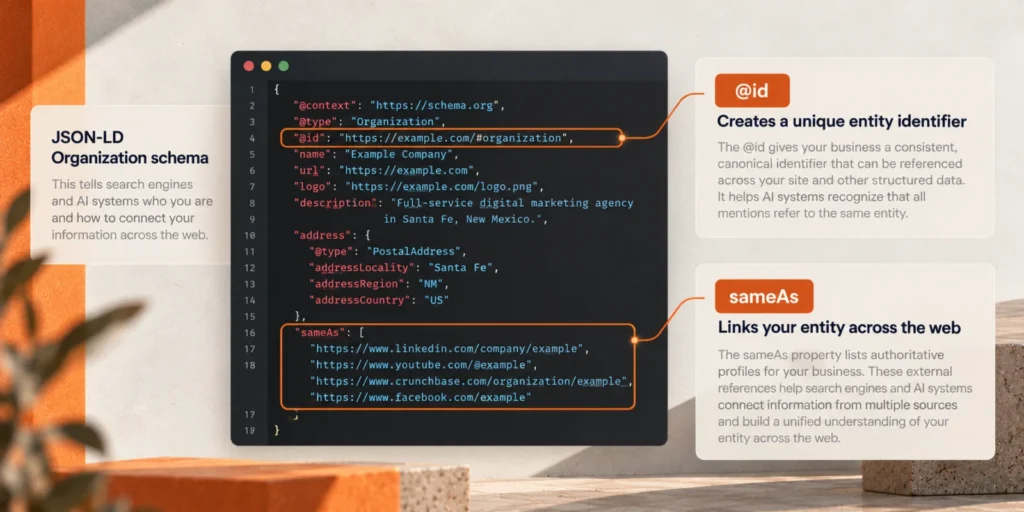
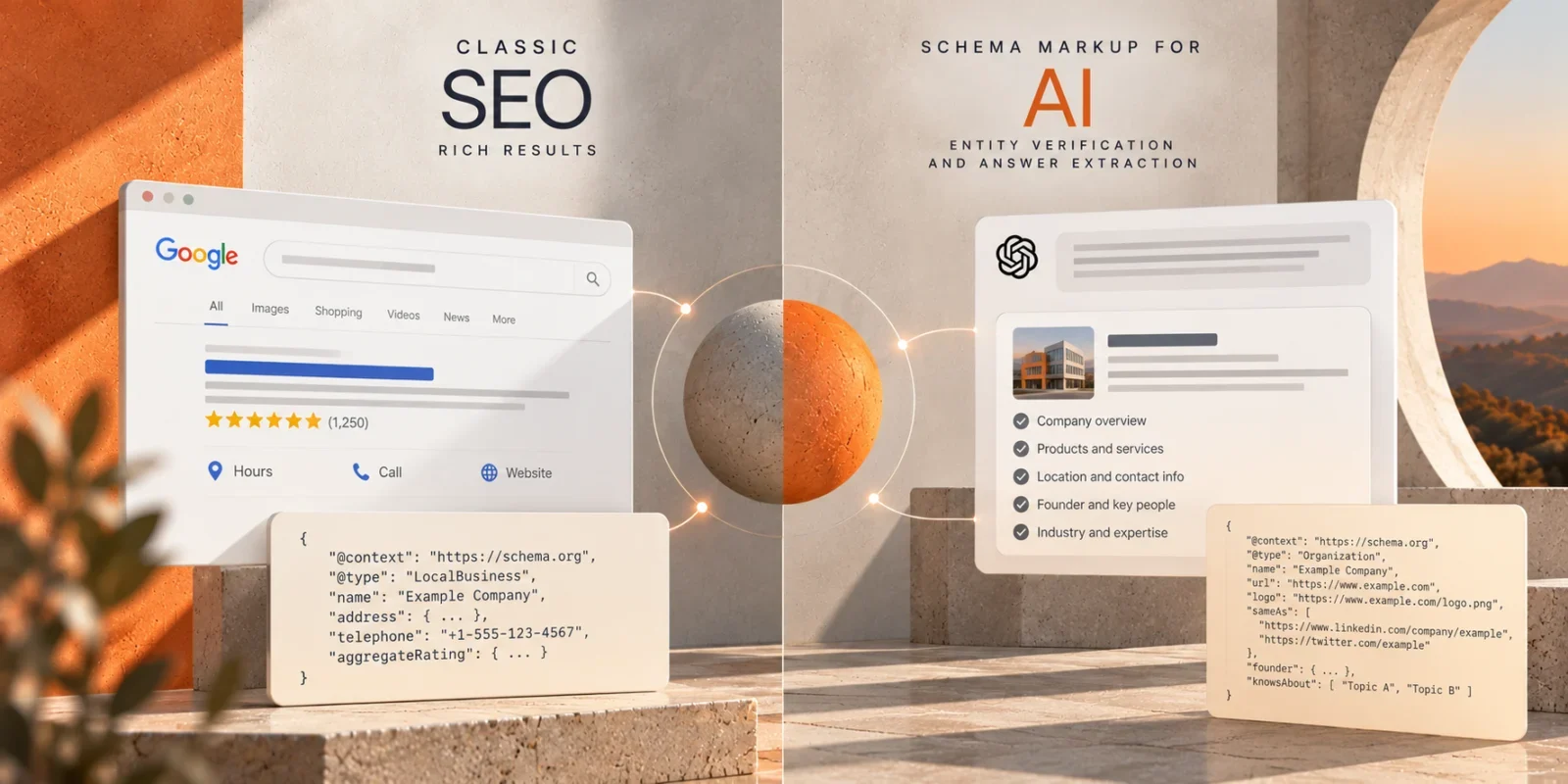
        This is the one most small teams skip because it sounds technical and optional. It’s neither. Schema markup is essentially the language AI systems use to read your site’s logic. If it’s messy or missing, you’re invisible to a layer of the system that’s becoming more important every quarter. It’s not complicated to implement but it has to be done right.

        What this means for how you think about content

        The brands that are going to stay visible as search continues to shift are the ones treating their content like a data asset instead of a publishing calendar. Every piece should be structured to answer a specific question clearly, reference specific entities, and make it easy for a system to understand what you’re an authority on.

        That’s a different brief than “write a blog post about X.” Just remember it’s not harder, it’s just a different mental model.

        The good news is most of your competitors haven’t made this shift yet. The window to build a meaningful advantage here is open but it won’t stay open forever.

        This is a core part of what we do for clients at And Zeros. Auditing how your brand reads to AI systems and fixing what’s broken. Get in touch if you want to know where you stand.

        Read More
        Person digging through citations
        AISEO
        April 28, 2026By Doug Saltzman

        What Actually Gets Cited by ChatGPT (We Studied the Patterns)

        Everyone is writing “What is GEO” guides right now.

        Almost nobody is actually studying what ChatGPT cites, or why.

        So we did. Across dozens of commercial queries in our clients’ industries, we pulled the sources ChatGPT returned, compared them against traditional Google rankings, and looked for the patterns. Here’s what showed up in almost every answer.

        The #1 Predictor Isn’t What You Think

        If you had to guess, you’d probably say domain authority, or backlinks, or some algorithmic edge case only Neil Patel understands.

        It’s not.

        The single strongest predictor of whether a page gets cited by ChatGPT is structural clarity. Simple explanation is whether the page is built in a way an LLM can actually extract from. A Princeton, Georgia Tech, and Allen Institute for AI study found that 32.5% of AI citations come from comparison articles, not because comparison articles are better written, but because they’re structurally easier for a model to chunk.

        Domain authority helps, but a clean Reddit thread will get cited over a DR 85 marketing blog if the Reddit thread answers the question in 60 words and the marketing blog buries it in paragraph nine.

        Five Patterns We Saw Repeatedly

        01: The answer lives above the fold.
        Every cited page we studied had a direct, definitional answer in the first 100 words. Not an intro or a hook. A straight-up declarative sentence that a model could lift verbatim. If your content opens with “In today’s rapidly evolving landscape…” you are already out of the running.

        02: The entities are specific and named.
        Cited pages named the tools, the people, the studies, the companies, the frameworks. Vague pages lost every time. “Enterprise marketing platforms” gets beaten by “HubSpot, Marketo, and Salesforce Marketing Cloud.” The model cites the one that lets it build a knowledge graph.

        03: The structure is chunkable.
        H2s that ask the question a user would ask. Short paragraphs (3–5 sentences). Bulleted lists where bullets actually stand alone. If you have to read 400 words to extract a 50-word answer, the model won’t bother. It’ll cite the page that already did the extraction for it.

        04: Recency matters more than depth on fast-moving topics.
        For anything time-sensitive (prices, policies, product releases, 2026 trends), ChatGPT and Perplexity heavily favor content updated in the last 90 days. A thin but fresh article will beat a deep but stale one. This isn’t fair, but it’s how the systems behave.

        05: The page exists as a node, not an island.
        Cited pages link out to authoritative sources (studies, official docs, named experts) and link internally to related content. They behave like nodes in a knowledge graph, which is exactly what models are modeling. Orphan pages get ignored no matter how good they are.

        What This Means for Your Content

        Stop writing for humans who might skim.

        Start writing for models that will extract.

        This doesn’t mean robotic content, it means content with enough structural integrity that both a reader and an LLM can find the answer they came for in under 10 seconds. The best cited pages we saw were genuinely useful to humans and easy to chunk. Those aren’t competing goals anymore.

        The practical shift:

        • Lead every section with a standalone answer:
          A 40-60 word block that works if pulled out of context.
        • Name specific entities:
          No “leading CRM platforms.” Say HubSpot, Salesforce, Pipedrive.
        • Update aggressively on fast-moving topics:
          If your post says “2024 trends” in April 2026, it’s not getting cited.
        • Build clusters, not islands:
          Pillar + spoke structure. The system rewards topical density.
        • Treat structured data as a required input, not an optional nice-to-have:
          Schema gives the model the map.

        The Bigger Shift

        The agencies that figure this out in the next 18 months will build the category.

        The ones that don’t will keep sending ranking reports to clients whose traffic is getting quietly rerouted into AI answers they don’t show up in.

        We track both for our clients. If you want to see what your brand looks like inside ChatGPT, Perplexity, and Google AI Overviews, before your competitors do, that’s what we do.

        You’re not ranking anymore. You’re being cited… or you’re not.

        Read More
        You’re Not Ranking. You’re Being Indexed.
        SEOAI
        April 21, 2026By Doug Saltzman

        You’re Not Ranking. You’re Being Indexed.

        If your SEO strategy still involves a spreadsheet of keywords and a density percentage, you are optimizing for a version of the internet that no longer exists.

        In 2026, the gap between keyword-centric and entity-centric optimization has become a divide. Search engines don’t match strings anymore, they comprehend concepts. They don’t count how many times you say a word, they measure the salience of your entities.

        What is Entity Salience?

        Salience is a technical score (usually between 0 and 1) that an algorithm assigns to a specific person, place, or concept within your content. It’s a measure of how central that thing is to the meaning of your page.

        Google and the LLMs (Perplexity, Gemini, etc.) aren’t just scanning for the phrase “GTM strategy.” They are looking for the surrounding entities that prove you actually know what a GTM strategy is. Here’s what they’re actually looking for.

        • The Connective Tissue:
          Are you mentioning Customer Acquisition Cost, LTV, and Sales Velocity in the same breath?
        • The Hierarchy:
          Is your primary entity in the H1, or is it buried in the 3rd paragraph?
        • The Semantic Net:
          Are you providing enough attributes (founding dates, specific frameworks, proprietary data) for the machine to verify you aren’t just hallucinating?

        The Logic of the Knowledge Graph

        This is where the And Zeros philosophy hits the metal. Think of the internet as one giant knowledge graph… a web of nodes and relationships.

        When you publish a page, the goal isn’t to rank. The goal is to be indexed as a definitive node.

        If your content is vague or uses AI-slop adjectives, your salience score drops. The machine can’t figure out if you’re an authority or just a noise generator (but email me if you want to nerd out on noise generators.) If you use Structured Data to explicitly declare your entities, you are handing the machine a map. You’re telling it, “This node is the Founder, this node is the Framework, and they are connected by this Relationship.”

        Engineering for Extraction

        In the era of GEO (Generative Engine Optimization), you have to write for extraction. AI models don’t read your whole article; they chunk it.

        • The Answer-First Block:
          Start every section with a 50-word direct answer to the heading. This increases the salience of the entity in that section and makes you 10x more likely to be cited in an AI Overview.
        • Topical Integrity:
          Stop writing scattered posts my friend! If you want to own a topic, you have to build a cluster. 1 pillar page (the hub) and 10 supporting pages (the spokes). This tells the system that your domain isn’t just a site, it’s a topical authority.
        • Entity Resolution:
          Use consistent naming. If you’re “Samantha Smith” on your blog but “S. Smith” on LinkedIn, you’re making the machine work too hard. Consistency is a trust signal.

        Stop Counting, Start Connecting

        The Keyword Era (RIP) was about volume. The Entity Era is about Density and Relationship.

        If you provide the cleanest, most interconnected data, the gatekeepers will have no choice but to use you as their source. You aren’t just playing the game anymore, you’re providing the board.

        In case you haven’t figured it out yet, SEO isn’t dead—it’s the future. And that future is built on entities, not strings.

        Read More
        logotype

        Boutique digital marketing rooted in Santa Fe.

        Services

        Branding

        Growth

        Platform

        Contact

        Santa Fe, New Mexico

        hello@andzeros.com

        (505) 395-6413‬

        Working hours

        Mon – Fri : 9am-5pm

        Social

        LinkedinInstagram

        Copyright © 2026 And Zeros LLC. All Rights Reserved.